“...the average Canadian, the average Ontarian, isn’t really thinking about the end of the world. They’re thinking about the end of the month.”
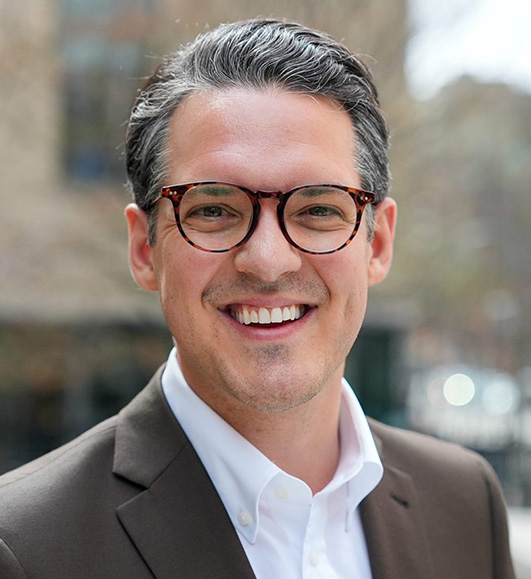
Dylan Marando has spent two decades inside Canadian politics. He worked for Premiers Dalton McGuinty and Kathleen Wynne, and served as deputy director of policy to Prime Minister Justin Trudeau. Now a candidate for the leadership of the Ontario Liberal Party, he makes a clear argument: climate policy wins when it speaks to people’s daily lives. Good ideas rarely fail for lack of government capacity. They fail when leaders cannot build and hold the coalitions needed to deliver them.

His signature idea is to get Ontario off US natural gas. Dylan calls it an Archimedean point: one move that unlocks fifteen others. Ending those natural gas imports would cut dependence on an unreliable trading partner and force rapid growth in solar and wind. He points to Minnesota, a cold state of about five and a half million people that he estimates draws close to 30 percent of its energy from solar and wind, against roughly 10 percent in Ontario.
“...the average Canadian, the average Ontarian, isn’t really thinking about the end of the world. They’re thinking about the end of the month.”
Ontario has done this before. Coal once supplied about a quarter of the province’s power, and the McGuinty government took it to zero. Dylan supports nuclear power, but he wants a hard cost-benefit test for each project, one that weighs sovereignty, innovation, and export potential alongside cost and emissions.
“I’m very romantic. But I’m a pragmatist when it comes to tactics and timing and pacing and coalition building.”
On selling climate policy, Dylan borrows a McGuinty maxim: “Most people are not thinking about the end of the world; they are thinking about the end of the month.” McGuinty sold the coal phase-out with smog days and children’s health. Dylan admits the consumer carbon price needs time to rehabilitate. In its place, he makes the affordability case for heat pumps and EVs, backed by no-interest loans and rebates that ease the upfront cost.
“No one thought we could go from 25 to zero on coal, but we did. So going from 25 to zero on natural gas is plausible, given our historical performance.”
His work on the National Housing Strategy taught him how hard it is to hold efficiency standards when builders say the economics don’t work. He believes the economics have changed. Government should build non-market housing to the highest efficiency standards, aim for net zero, and use that demand to grow a market of capable builders and suppliers. On adaptation, he would require and fund municipal adaptation plans, publish provincial plans with real accountability, and tackle insurance as flood-prone communities lose coverage.

Dylan’s own start in politics is a story worth repeating. At 19, he walked into his first Green Party riding meeting in Richmond Hill. Four people sat in the room, and they asked him to be the candidate. He said yes. He also shares a McGuinty test every leader should try: “Watch a politician debate with the sound off.”
His core lesson is authenticity. People prefer an honest answer they disagree with over an agreeable one that rings false. With a trade war, rising energy costs, and climate impacts already arriving, Dylan offers Ontario a pragmatic path: frame climate action as sovereignty, affordability, and hope.
Books Recommended by Dylan Marando
The Republic of Plato
Plato; translated, with notes and an interpretive essay, by Allan Bloom; introduction by Adam Kirsch
Basic Books, 2016 (third edition; Bloom translation first published 1968) | Paperback | ISBN 9780465094080
- Publisher page: https://www.hachettebookgroup.com/titles/allan-bloom/the-republic-of-plato/9780465094080/
- About the book: A strictly literal English translation of Plato’s dialogue on justice and the ideal city, paired with Bloom’s long essay on how to read it.
- Dylan on this book: “If you can get your hands on Allan Bloom’s translation of the Republic, he has a really interesting essay at the front of it that shaped how I read the book. That was formative.”
The Closing of the American Mind: How Higher Education Has Failed Democracy and Impoverished the Souls of Today’s Students
Allan Bloom; afterword by Andrew Ferguson
Simon & Schuster, 2012 (25th anniversary edition; first published 1987) | Paperback | ISBN 9781451683202
- Publisher page: https://www.simonandschuster.com/books/Closing-of-the-American-Mind/Allan-Bloom/9781451683202
- About the book: Bloom argues that American universities lost their grounding in the great books and that this intellectual failure lies beneath the country’s social and political troubles.
- Dylan on this book: “I don’t agree with everything in it, but it contributed to my somewhat romantic view of the world and a values-based approach to politics.”
The Power Broker: Robert Moses and the Fall of New York
Robert A. Caro
Vintage Books, 1975 (first published 1974) | Paperback | ISBN 9780394720241
- Publisher page: https://penguinrandomhouse.com/books/24312/the-power-broker-by-robert-a-caro
- About the book: A Pulitzer Prize-winning biography of Robert Moses that traces how one unelected official amassed power and reshaped New York over four decades.
- Dylan on this book: “That book was great, and it exposed me to real politics.”
On the Inside: Fieldnotes from the Prime Minister’s Office & Silicon Valley
Elise Maiolino
Copper Birch Press, 2026 | Paperback | ISBN 9781067572808
- Author page: http://www.elisemaiolino.com
- About the book: A memoir by a former senior advisor to Prime Minister Trudeau, following her path from academia to the PMO and on to tech policy at Uber.
- Dylan on this book: “She wrote a great book about what it felt like to be inside the Prime Minister’s Office, inside academia... and inside the private sector.”
Please Support this Podcast:
If you like this podcast, please support us by going to the Apple Podcasts site and “liking” our podcast by rating us. It will help increase the ability of it to be seen by other like-minded people. Thanks for listening!”