
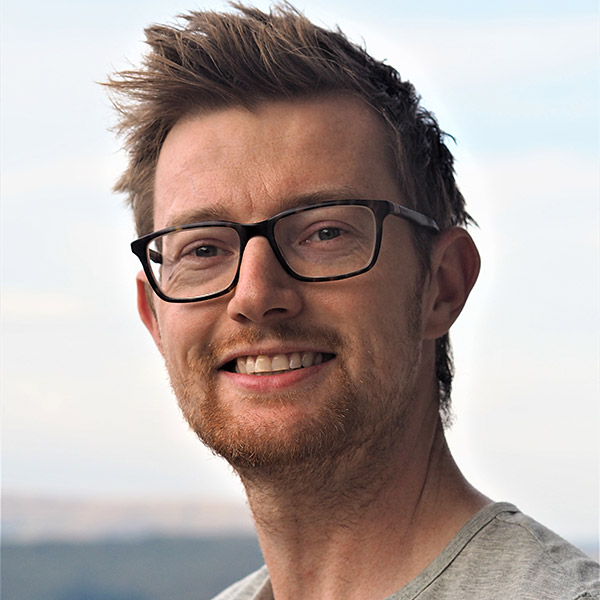
“I want ecology, I want nature, I want that immediate, day-to-day relationship building between the people who live in a city and the birds, the bugs, the greenery, whatever's in the ocean or the river nearby.”
Chris Fitch grew up with a forest on his doorstep in the Solomon Islands, and that early relationship with nature never left him. It carried him through a career at Geographical magazine, the publication of the Royal Geographical Society, and into his latest book, Wild Cities, a collection of case studies on how nature is returning to urban life, and how that return can help cities fight and adapt to climate change.
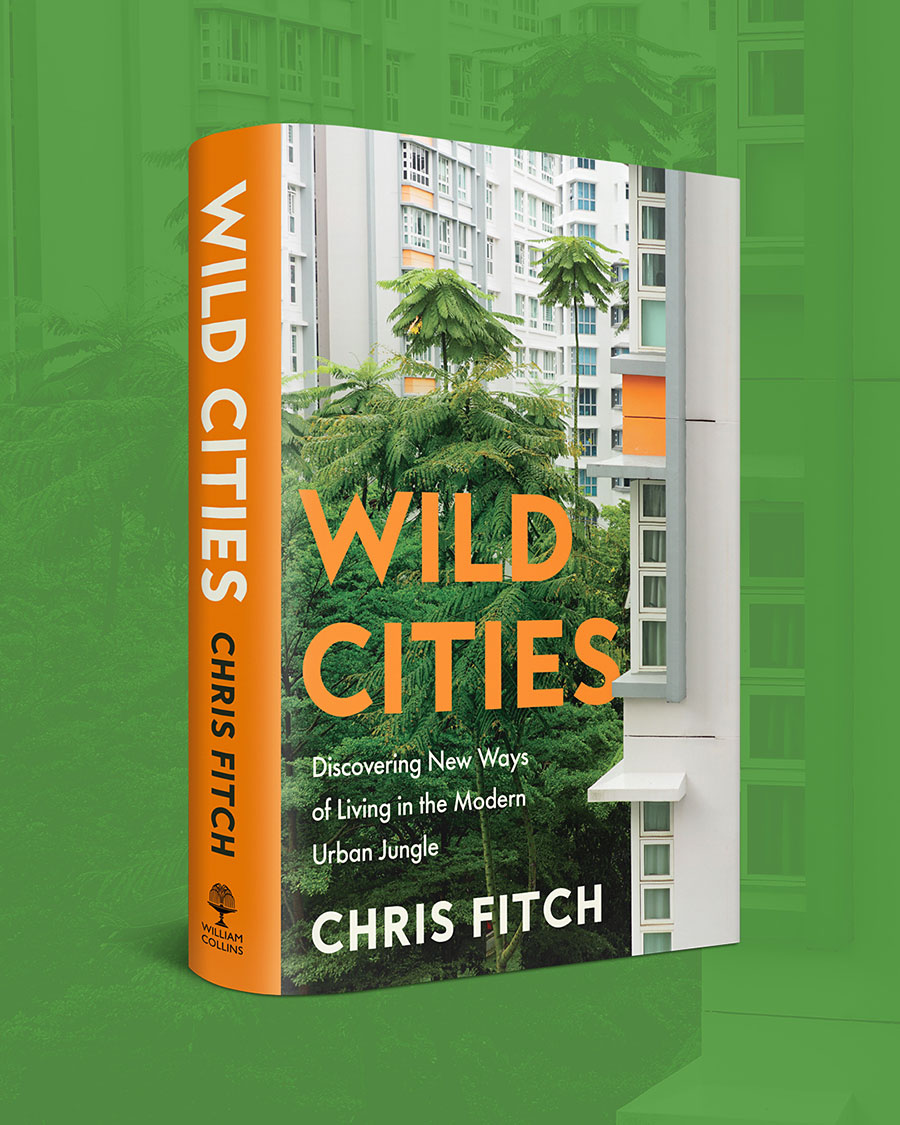
Chris tells Craig that writing the book was less a science than a search for good stories. He wanted examples that would catch people off guard, that were replicable rather than dependent on unlimited money or authoritarian power, and that he could visit in person. What he found, again and again, was a pattern: successful urban ecosystem projects need three things at once, grassroots passion, one or two committed local champions, and government backing. Miss any one of the three, and the project stalls or fades once the enthusiasm runs out.
“Success really needs leadership, community engagement, and some kind of governmental connection and support. All three have to be there.” (Chris Fitch)
The conversation moves through some of the book's strongest cases. In Japan, botanist Akira Miyawaki's method of dense, native tree planting produces small, resilient forests almost anywhere, forests that sequester carbon, cool their surroundings, and stand up to heat and flooding with almost no upkeep. In Sydney, marine scientists redesigned seawalls with small cavities that let sea life return, turning dead concrete into something close to a coral reef. In Munich, residents tore out the concrete banks of the Isar River and let it behave like a real river again, bringing back beavers, fish, and a public swimming spot in the process. And in Wellington, New Zealand, a bird conservation campaign succeeded by appealing to civic pride, framing native birds as part of the city's identity rather than an abstract environmental cause.
“I think the economics is in our favor… I just feel like we're on that arc towards progress.” (Chris Fitch)
Chris and Craig also dig into the harder question underneath all of this: how do you get people to act on climate change when the problem feels too big and too slow-moving? Chris argues that framing climate action as an investment rather than a cost changes the conversation, and that local, visible nature, a park, a restored river, a patch of forest at the end of a street, does more to build public will than abstract statistics about carbon ever will. He is candid about what can’t be saved, most coral reefs, some glaciers, but insists the all-or-nothing narrative of “twelve years to save the planet” is both wrong and counterproductive. The real story, he says, is a slow, uneven, but genuine shift toward better outcomes, and every local project that succeeds makes the next one easier to imagine.

In the end, the throughline is clear. Chris isn't asking listeners to solve climate change. He's asking them to start with what's on their own street, to learn the name of a tree or a bird, to push for a river to run wild again, and to trust that these small acts of attention add up to something larger. It's a hopeful, grounded case for rewilding cities, told through the people already doing it.
Books Recommended
1. Wilding: The Return of Nature to a British Farm
Author: Isabella Tree
Publisher: Picador (Pan Macmillan), 2018
ISBN: 978-1-5098-0509-9 (paperback)
Chris Fitch on this book:
“The first book is by Isabella Tree, a British author, called Wilding, about the restoration of her farm in the south of England, an amazing example of how you can have agriculture and ecological restoration happening in the same space.”
2. Last Child in the Woods: Saving Our Children from Nature-Deficit Disorder
Author: Richard Louv
Publisher: Algonquin Books, updated and expanded edition, 2008
ISBN: 978-1-56512-605-3
Chris Fitch on this book:
“I think anything by Richard Louv is amazing. Last Child in the Woods is such an important book for understanding mental health and the normalization of nature, or the lack of it, in our lives.”
3. My Family and Other Animals
Author: Gerald Durrell
Publisher: Penguin Books, reprint edition, 2004
ISBN: 978-0-14-200441-8
Chris Fitch on this book:
“There's one book that came back to me, which I reread recently — I don't know how well it's traveled outside the UK — Gerald Durrell's My Family and Other Animals, from his time in Greece in the 1930s. It's the most beautiful, evocative writing about a kid obsessed with nature, finding out how the ecology around his home works, spending a whole afternoon following bugs around.”
Note: ISBNs above refer to a current, widely available edition of each title. Multiple editions (hardback, paperback, audio) exist for all three books; please confirm against the specific edition you plan to link in the show notes.
Where You Can Reach Chris
You can reach Chris at his website, chrisfitch.org (https://chrisfitch.org/), or on Instagram is the best place for me now. Chris is also on Bluesky as well. Chris’s books are available from most booksellers.
Please Support this Podcast:
If you like this podcast, please support us by going to the Apple Podcasts site and “liking” our podcast by rating us. It will help increase the ability of it to be seen by other like-minded people. Thanks for listening!”